Sunday, May 5, 2013

Loreto Food - A Guest Blog Perspective


As this season winds down and I begin to get ready to leave Loreto soon for the summer months I am pleased to be able to offer you, my dedicated readers, an infrequent alternative view of “Living Loreto”, this time from the perspective of another follower of my Blog who recently contacted me and offered to write a Guest Blog.

Eddie Shackleford is an Editor and Travel Writer who has visited Loreto and he brings us his enthusiastic commentary on the food experiences he had here.  I thought it would be interesting to add a different point of view on a topic that I haven’t written about (restaurant food in Loreto) for a couple of years. When I received Eddie’s draft of this Blog my first impression was that maybe he was a bit “over the top” in his enthusiasm – but then I decided perhaps I have become a bit jaded myself, and who was I to judge another person’s positive reaction.  Particularly when it is well written and coming from an experienced travel writer, so I hope you enjoy Eddie’s perspective as much as I appreciate a rare hiatus from my weekly postings.
 
Unique and Timeless Loreto
The picturesque Mexican city of Loreto has become an out-of-towner favorite because of its authentic historical charm and readily available modern amenities. Tourists visit for the year-round sun and the call of the sea, and keep coming back for the friendly and familiar atmosphere along with the delicious local cuisine.

Loreto has held a level of importance in Baja California for centuries. It was the first Spanish settlement in the Baja, and it remains a favorite of travelers because Loreto has managed to preserve the romantically historic buildings and streets while adding the modern touches and worldly flair that make for great vacations.

Some time ago, the government began to bill Loreto as the newest Mexican resort town. They invested heavily in local development, wooing in visitors with a new airport and golf course. Luckily for travelers, it has never become the overcrowded cookie-cutter resort mecca that it could have been. Instead, it is a town that has the perfect balance between an ancient fishing village and a modern vacation destination. The ease of travel provided by the local airport makes Loreto an attraction to those buying second homes as well as those who may be just visiting. It only takes a few hours to get to Loreto from Los Angeles by air, so many find Loreto the perfect place to simply step off the plane into paradise.

The local tourism interests have taken great care to keep an eye to conservation, which means tourists will hopefully have access to a preserved abundance of beautiful landscape for generations to come. One of the biggest draws of the area is the marine conservation area in the beautiful bay where travelers can snorkel and dive to see an amazing bounty of aquatic life in unsullied waters.

The sparkling Sea of Cortez off the shores of Loreto also provides visitors the experience of swimming with dolphins or enjoying world-class whale watching. The most popular ocean activity for visitors by far however is deep sea fishing. Many adventure companies provide both gear and guided fishing trips. The best part of ocean fishing in Loreto is that many of the locally famous and delicious restaurants will prepare your fish in their kitchen right before your eyes.

Character of Loreto's Local Food Scene

There are really no rules when it comes to the Loreto food scene. Many in the local restaurant business that have made their permanent homes in Loreto hail from diverse international locales so the flair of the food is different in each restaurant. The owners range from those raised on the food in local Loreto kitchens to those with professional culinary training from Mexico City, San Diego or Europe.

The only thing you will find in every restaurant in Loreto is that there are no boundaries. There is no barrier between the kitchen and the table since the chef will likely be the one talking to you about your food and crafting delicious meals to your exact taste. There are also no barriers between land and sea since you may even be able to see the clams you are about to eat be delivered by the person who dug them up that day. In some cases, the restaurant you visit is also your destination for the day. La Picazon is a locally famous restaurant 10 km north of town that is located on the beach and patrons can collect shells or take a quick jaunt on a kayak between courses.
Fresh and unique food made with love and attention is not just talk in Loreto. Everything is fresh.  Each pastry, tortilla, or loaf of bread was made that morning. In Loreto the “catch of the day” means exactly that, the fish served on your plate probably was caught that morning!


It’s not hard to find locally sourced food prepared in traditional Baja style. What’s most

surprising about Loreto is the quality and diversity of foreign food options. The pulled pork, waffles and sushi are just as expertly prepared with fresh quality ingredients as the Mexican cuisine. Many restaurants import delicious additions to the local fare such as craft beer and Argentinean beef.

There is never any hurry in Loreto eating establishments. Many offer the luxury of casual elegance, while others have the heart and soul that can only be found in a “hole-in-the-wall”. What they share in common is that they are places to gather and savor the great food and company of this city that time forgot. As you probably gather, one of my favorite experiences while I was in Loreto was eating the food!

Unique Foods of Loreto

On a drive through Baja California you can expect to find any number of restaurants serving fish

tacos and the like, and more than likely each one will have fish that is more delicious than the last.  Of course Loreto has fish tacos, and they will not disappoint you. But what Loreto does best is the fusion of all styles of North American and Mediterranean cuisine. You may expect to eat the best Mexican food you’ve ever had - and you will, but you may also find the best hamburger or vegetable lasagna here as well.

 
Huarache is a favorite of both visitors and locals. The fried masa (corn) base is covered with any number of toppings including salsa, cilantro, potatoes and meat finished off with queso fresco or fresh cheese. Other popular Mexican dishes in Loreto for visitors to sample include fried stuffed potatoes called papas rellenos and seasoned skirt steak called arracherra.

Any pescado or fish menu item will be sure to please, especially the mahi-mahi that locals call dorado. It is quite the unique Loreto experience to come back from a fishing trip and be able to ask a restaurant to cook your catch. Many restaurants will cook up the fish you bring them in several diverse, unique and delicious styles.

Breakfast

A few restaurants in Loreto only serve breakfast and lunch, and any of those would be a traveler’s best bet for a scrumptious morning feast. Visitors will be delighted to find international favorites like French toast or waffles or a classic egg and sausage spread.

A few local favorites can be found on breakfast menus, like traditional Mexican huevos rancheros or
even a surprisingly delicious cactus smoothie. What makes a Loreto morning meal special however is the abundance of fresh quality ingredients and the care taken in the preparation of each plate. Juice was squeezed fresh this morning and comes in a staggering assortment of sweet fruity flavors. The bread for your French toast probably came out of the oven only a few hours ago. Your coffee and fresh pastries may just be the best you’ve ever had.

Lunch

Lunch is also an adventure. Those hungry for their midday meal may delight in the abundance of fresh and surprisingly delicious sandwiches and salads available at cafes and delis. A driving tour may bring travelers to pubs or saloons off the beaten path, where they can enjoy an ice cold beer with a hamburger or BLT worth writing home about.

Dinner

A stroll around the town´s central square reveals a plethora of heavenly dinner options. Whatever type of food you are craving, whether it is Italian, Mexican or American, will be prepared beautifully and will be served with signature local hospitality. Many families cap off each sun-soaked day of their visit with a refreshing ice cream cone from the best ice cream parlor in town which can be found within a block of the square.

Drinks

The flavor of international fusion does not stop at Loreto’s food. Taverns and pubs carry imported wine and craft brews paired as well as local favorites. It is not difficult to find a spot to watch the beautiful waters of the Sea of Cortez with your favorite drink in hand. The food served at Loreto’s pubs is not just an afterthought. Much of the best food in the city is served either as entrees or tapas-style small plates with items like world-class sashimi to accompany your libation.

Summary

Many resort towns present only what foreigners want to see while neglecting to preserve their heritage in a misguided attempt to please their Visitors. Loreto is not like that. In every aspect, it welcomes and blends new cultures with its own while preserving its ancient history and charming atmosphere. The food in Loreto has blended the traditional cuisines of locals and visitors together to become something novel, fresh and truly unique.


 Bio: Eddie Duncan Shackleford is a Senior Editor for Direct2TV and loves to research and          write topics on tourism and travel. To gain a unique experience, Eddie travels to different places so that he can write interesting content about them. Eddie D. Shackleford can be followed on twitter at: @Eddie20Ford


Seeing a familiar place through a Visitors eyes, brings new insights and appreciations that even the most enthusiastic Resident can become “jaded” with over time.  Enjoying that fresh perspective from another point of view is a relatively new experience for those of us who are “Living Loreto”. 

Sunday, April 28, 2013

Loreto - Pueblo Magico for the Children


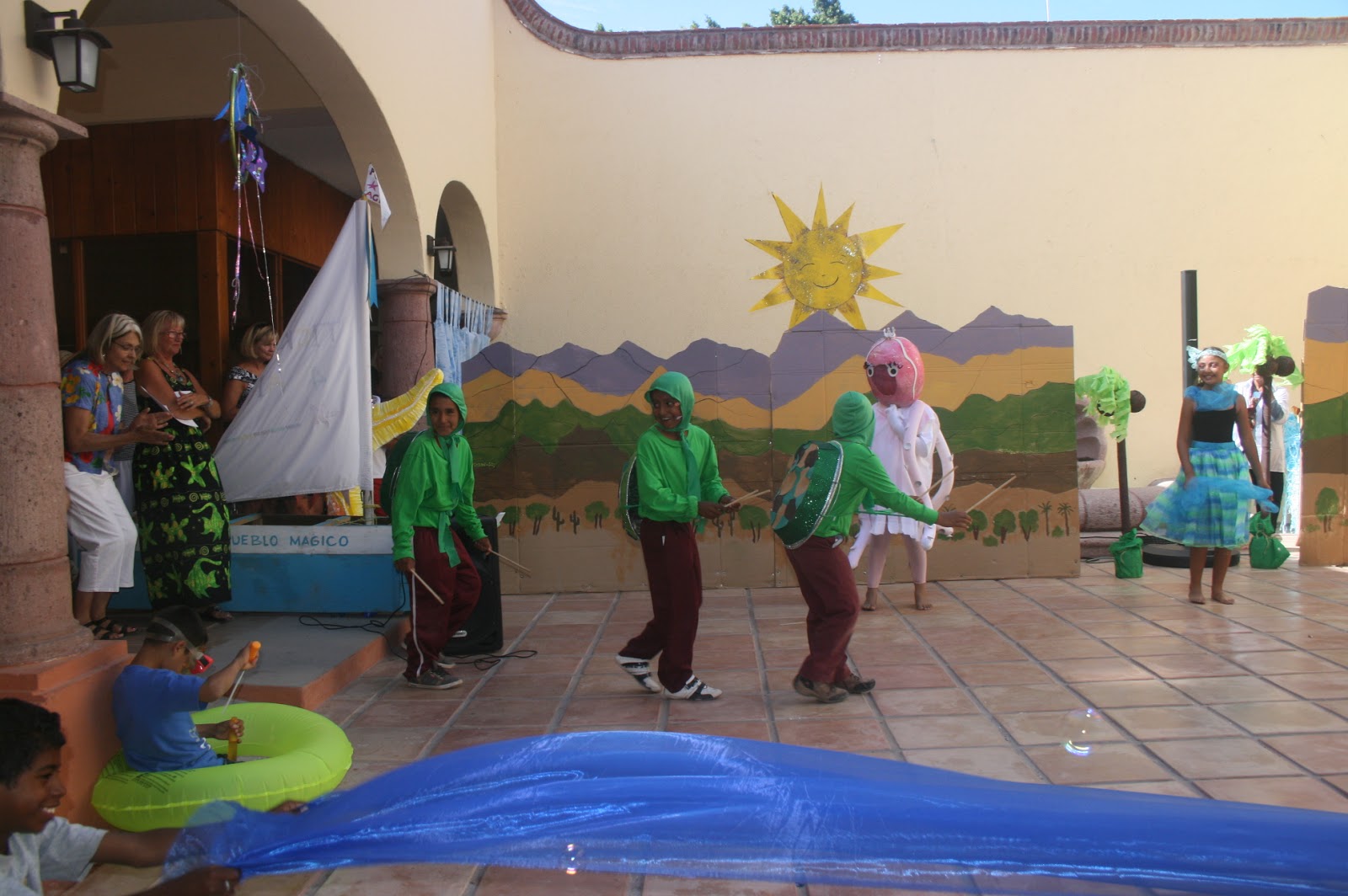
This past week there was another fundraising event here in Loreto Bay, this time to benefit the Loreto Internado, organized in large part by the Loreto Bay Volunteers - but including a number of key Volunteers from the town as well.  The theme was “Pueblo Magico” (Magic Town) which was a designation that Loreto received last year from the Mexican Government as part of a tourism promotion program that focuses on destinations in Mexico that combine natural beauty and historical significance.
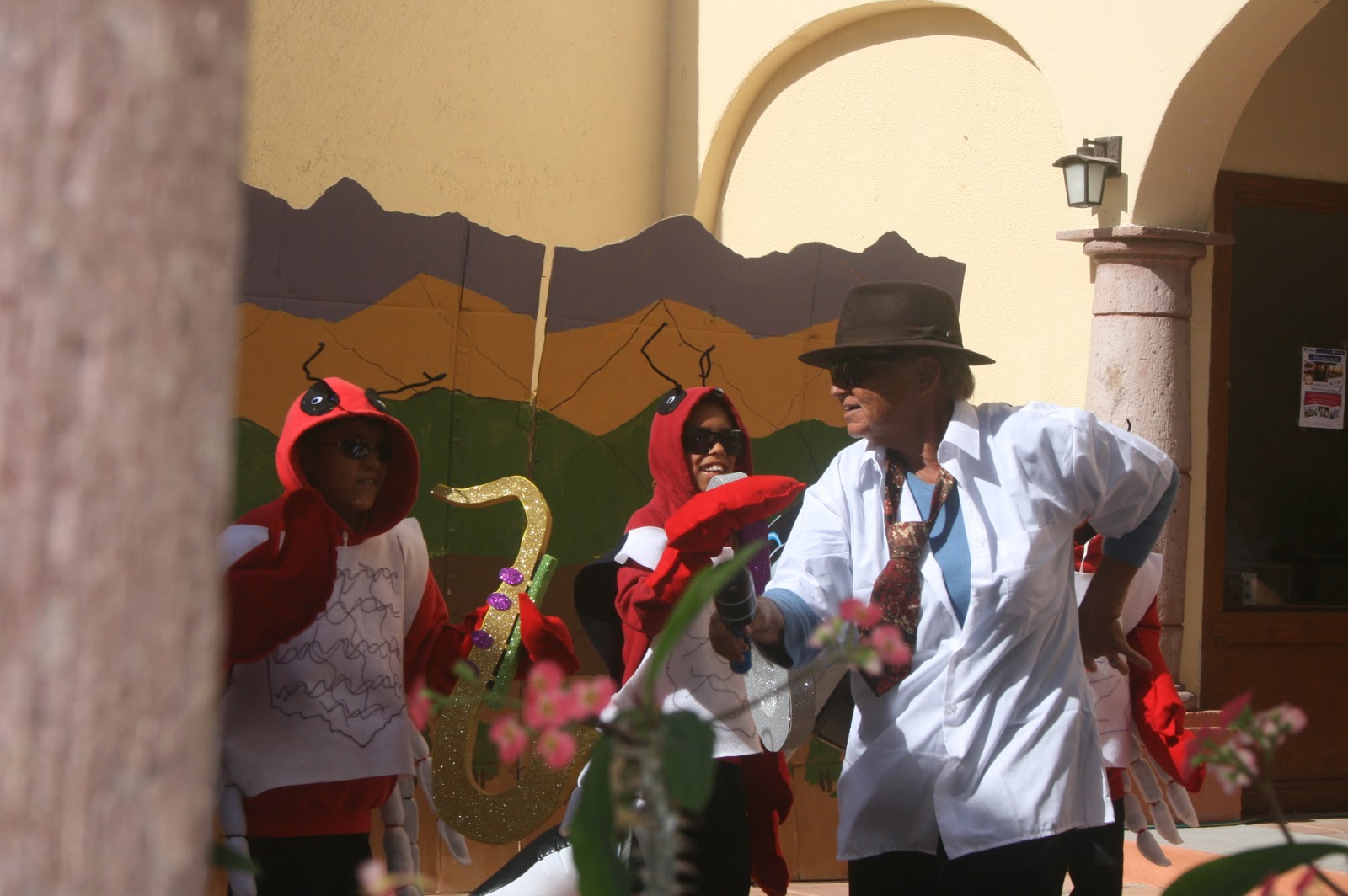
The Golf Course Clubhouse was the scene for the event and about 40 children from the Internado performed a fantasy story that was loosely based on a girl who felt lonely and met a whale who introduced her to all the other sea creatures including mermaids, lobsters, and turtles, among others.  These characters were all inventively costumed and choreographed by the Volunteers and each group of creatures performed their “scene” to a recorded musical soundtrack in front of a painted backdrop of the Sierra de la Gigante Mountains.

About 200, mainly Loreto Bay residents attended and purchased 50 peso (about $4.00 US) tickets and filled the colonnade surrounding the Clubhouse Courtyard, which was the “stage” for the children’s performance.  Wine, beer and cold drinks were available and following the performance “kid’s food” in the form of hot dogs, tacos, guacamole and flan was sold, and the crowd filled tables and chairs that had been set up around the outside of the Clubhouse.  As people finished eating, the 5 man version of Los Beach Dogs took to the stage and played two sets into the early evening when it was the adults turn to dance to the popular classic rock repertoire.   
As usual, a great time was had by all, but I wanted to focus on the beneficiary of the fundraising – the Internado, which is a residential educational support system that will be unfamiliar to many of you who do not spend time here in Mexico.


Loreto has a surprisingly large number of schools for a town this size, but the Internado plays a unique role among them and traces its history here back almost 60 years.  Basically the Internado is a residential facility serving elementary school children from the surrounding rancheros, who would otherwise be unable to attend school due to their remote living circumstances, being too far from town to attend on a daily basis.  Therefore the system of residential dormitories was developed to accommodate the students from Monday to Friday and return them home to the rancheros to spend the weekends with their families.   
The roots of this go back to the Mexican Constitution in 1917 which declared that every child in the country was to learn to read and write, at the minimum.  The first Internado opened here in Loreto in 1946, almost 30 years before the highway that opened most of the Baja was built, and its first home was in several rooms in the ruins of the old storehouse next to the Loreto Mission (which now houses the Mission Museum).

While this was far from an ideal situation, almost 70 years ago in Loreto it was the only suitable building available.  Finally, in 1971 the Mexican government built the present facility, with two dormitories, a dining hall and kitchen, and a house for the director in Colonia Zaragoza, a “suburb” of Loreto across the large arroyo south of town.  Needless to say, this was a huge improvement - but without sufficient funds from the Government to maintain the facility, things started to deteriorate with the wear and tear from the large numbers of children passing through.  Even sufficient food became a challenge because Government funds only supplied a subsistence diet of beans and rice which many of the families could not afford to supplement from home.

By 1982 when a new Director took over the Internado things were pretty grim for the kids,  only two of the toilets and one shower worked and the children were getting one tortilla and half a cup of coffee for breakfast before they went to school.  He appealed to the then small ex-pat community in Loreto for assistance and soon the plumbing was fixed and food and other basics like soap, toothbrushes and toothpaste were donated and the Volunteer support of the Internado had begun.

English lessons conducted by Volunteers soon followed, along with others who spent time enriching the kids learning experiences, including Linda, a Nopolo resident who is still very active after 20 years - she even had a cameo appearance in this evening’s performance.  The Internado has become an important focus of the Loreto Bay Volunteers, an ad hoc group that has become quite active in many areas within the larger community of Loreto.  These volunteers operate under the umbrella of “Los Amigos de Loreto” whose operations I described in some detail in an earlier Blog http://livingloreto.blogspot.mx/2013/02/amigos-de-loreto-friends-with-benefits.html, and who also organized the very successful Food and Wine Festival http://livingloreto.blogspot.mx/2013/03/loreto-food-wine-festival-2013.html.

The next major challenge faced by these volunteers who want to assist with the education of the children of the area, is replenishing the scholarship fund that has been in operation here for a number of years.  Here in Mexico, education is free up to the grade six level, but there are fees to attend Junior and Senior High Schools amounting to about $200 US per student per year to cover uniforms, school supplies, lab fees etc.  – a modest amount by North American standards, but beyond the reach of many of the Internado children’s families, who live on a subsistence level in the remote rancheros described in last week’s Blog http://livingloreto.blogspot.mx/2013/04/spring-rain-comes-to-living-roots.html.

As a result, without sufficient funds for the higher education fees, many promising elementary students unfortunately finish their education at the grade 6 level, denying them the opportunity to improve their opportunities and continuing the cycle of subsistence that has been their family’s lot for generations.  To this end there have been some endowments and generous donations in the past to the scholarship fund, and currently it is supporting 19 students learning at the Junior High to University level.

However, these funds have been depleted and more support is required to keep this valuable and important program viable going forward.  You can make a difference by contributing on line through the Amigos de Loreto website (www.amigosdeloreto.com) or there is a foundation that can accept donations, you can reach the O’Neil Loreto Education Fund through: Kirk Connally, 665 Tabor Lane, Santa Barbara, CA. 93108 and mark your check “OLEF” so the contribution finds its way back to Loreto to keep on the good work.

Sharing in the fun and excitement of 40 kids performing a pageant about the “Magic Town” they live in, and seeing the pleasure that 200 ex-pats and volunteers received from their efforts (many of whom who have grandkids the same ages) while contributing modest amounts that will have a major impact on the way that these kid’s can live while away from home getting a basic education – this was one of the more important parts of “Living Loreto”!

Sunday, April 21, 2013

Spring Rain comes to Living Roots


One of the most significant cultural developments I have seen this Season in the area around Loreto has been the progress the Living Roots organization has made and the impact that it is having on the ranchero community surrounding San Javier.  I have written about Raises Vivas and it’s dynamic Director, McKenzie Campbell, earlier this season (http://livingloreto.blogspot.mx/2013/03/living-roots-planted-in-san-javier.html) and so I was interested when I heard about a fund raising event for their benefit being held in the home of Jesse and Dirk, who live within (but not part of) the Loreto Bay development.

It was a perfect calm day, with warm sun and blue skies when about 50 supporters, mainly from Loreto Bay and the surrounding Nopolo neighborhood, gathered to make a contribution to Living Roots and learn more about what they have accomplished and what their goals are for the future.  Laid out in the beautiful back yard of out host’s home were some light snacks and cold drinks, as well as samples for sale of some of the Living Roots products including leatherwork and embroidery as well as some ranchero made delicacies like Dulce de Leche (a delicious caramel like topping).

 During this event McKenzie made a very interesting presentation about the beginnings and progress of the organization she has been involved in building over the past few years and, rather than try to summarize her words, I asked her permission to reproduce her text here for you all to read for yourselves:


“Living Roots began in the 2010 as a Social Enterprise with the purpose of working with Baja’s ranchero families to adapt and thrive in a quickly modernizing world.  The Living Roots model is not about hand-outs, or traditional charity.  We believe in empowering ranchers and helping provide the tools to determine their own futures and success.

The picture of who these Baja’s rancheros are may be best painted by the first ranching family I met in the Sierra la Giganta.  In 2008, my husband Dave and I, walked into the mountains scouting a new course area for the National Outdoor Leadership School (NOLS) which we were both involved in.  We were in search of the cowboy legend, Dario Higuera, who Trudi Angel, owner of Saddling South had told us we had to meet.

 After several long days of walking along the Camino Real on mesa tops and over sharp volcanic rock, we finally arrived at Rancho El Jarillal, where Dario Higuera and his family live.  We were nearly out of food, dirty, stinky and thirsty.  Despite our showing up out of the middle of nowhere, Dario and his family welcomed us in with open arms.  They sat us down in the shade, served coffee, goat cheese and squash sweets. 

 It was a Sunday, and while we ate and took a bath, Dario put on his hat and saddled up his burro to guide us the several kilometers up the arroyo that represent his life story.  He had spent several years growing up in an over hung cave next to a big tinaja, water hole surrounded by rock art.

Then he went to boarding school in San Javier for three years, broke horses for living, herded cows down to the docks in Loreto, and eventually started to make a life for himself and his family raising goats and cows, selling cheese as well as developing his skills as a master leather craftsman.    To me, the Higueras represent the essence of the Baja ranchero culture; they are welcoming, generous, proud, self-reliant, and incredibly devoted to their land and to their family.

The following year, with NOLS, I brought the first group of American students on an expedition through the sierra, where we met other such genuine families living their lives intertwined with the land, which we all appreciated and admired.  However, it was during our drive out of the mountains at the end of that first course, when we first saw the bulldozers breaking way for the new paved road into San Javier, that it struck me what a critical time this is for rancheros like Dario.

While modernization such as the new road, the arrival of electricity, and within the last month, cell phone coverage, offers incredible opportunity, it also poses significant threats to their traditional lifestyle. This is especially true for a culture that has historically been quite isolated, has relatively little education, and for centuries has been predominantly self-reliant.  Never having needed to participate in the broader economy, and often times, not having ventured far from their ranches, these rancheros don’t know how to benefit from, or even recognize these new opportunities.  They have expressed fear at being left behind as the modern-world quickly overtakes them.

It was this realization that prompted me to go back to school to get an MBA in Global Social and Sustainable Enterprise and form a team that started Living Roots to help empower the rancheros to map out their own future on their own terms.  Community empowerment is a lovely, lofty goal - which in practice is a long and challenging road.  First we had to really listen to what the community of San Javier and surrounding ranches wanted for their futures.  In the summer of 2010 they asked for assistance to achieve three major goals:

 
·         Direct access to markets for their products

·         Protecting and rejuvenating unique traditional skills

·         Locally managing tourism

 
The first step in helping them actualize this vision was fostering local leadership and we formed a Leadership Team of seven members, one from each of the ranch communities that surround San Javier, to energize, organize, and make important decisions for their community.  Their first challenge was to learn how to trust each other, outline objectives and work toward them, and most important, openly communicate with each other through the inevitable “small community” challenges they faced.

 Next we created a Brand, “Living Roots”.  The San Javier Leadership team, which essentially represents a regional marketing association, decided the criteria the Raices Vivas (Living Roots) Brand is to represent.  They determined that to participate, products needed to be hand-made, by people who have origins in sierra communities and should be based on traditional skills.  With this brand promoting authenticity, Living Roots began to help rancheros improve product quality and discover new markets for traditional products such as olive oil, leatherwork, preserves and embroidery.

 With Living Roots help, the San Javier community built and opened the long awaited dream of an information center, which provides the rancheros as well as San Javier residents a space to directly sell products, organize tourism, exhibit their culture and lifestyle and serve as a central information and community hub.  Each ranch community contributed to the building, which was constructed in the traditional way with adobe walls, a stone floor and a thatch roof.

 The university in La Paz will provide a computer and library to make available resources such as best agricultural practices and literature that has been previously written about sierra families and the ranchero history.  For the past several months we have been working hand in hand with the leadership team and the two representatives in charge, Jesus Martinez and Trinidad Castro, to teach them inventory management, accounting, pricing and other business management techniques.

The group’s hope for the future is to incorporate as a Community Enterprise, similar to a cooperative.  Living Roots is walking them through this process toward autonomy, providing the tools to ensure the committee is sustainable from an organizational and economic standpoint, and that they are prepared to run and grow the business independently.

 Key to the enduring longevity of the ranchero culture is keeping young people excited about it.  We have done this in two ways.  First we went to the schools and asked what the kids what like to learn from local masters.  Their answers were across the board: how to plant, how to ride horses, how sew, and learn leather work and embroidery skills.  This sparked a program called Sierra Heritage Workshops where resident experts in their field come into the school to teach traditional skills.

Also this spring, we began our Jóvenes Documentalistas, or Young Documentarians program which is helping preserve valuable cultural history by training teenagers to use multi-media techniques to record and share the life-stories of their grandparents and local legends.  A couple of weeks ago, with a group of secondary school students, ages 12 to 17, we once again walked the long trail to Rancho El Jarillal, to talk Dario Higuera and his family.  But this time their niece and nephew and several other friends from surrounding ranches, got to prod them with questions about their lives, learn how to make their own leather belts and were able to document it all, to display soon at the Cultural Center.

 Our next goal is to establish Community-Driven Tourism.  We have begun to create the community organization needed to run a medicinal plant and interpretive trail through San Javier, past the mission and into the orchard.  Ensuring that this is truly community driven means more meetings and capacity building just to get to the step of making a brochure and finally putting in signs and infrastructure.

 This year we were fortunate to break a three year severe drought, but who knows what next year will bring.  In preparation for this unknown future, the ranchers have identified their most critical need as food security.  For them, this translates into planting more gardens, ideally organic, and increasing income apart from their traditional livestock.  As our next major objective, we would like to help rancheros begin to plan for the day the next drought hits, through organic gardening, income savings and water conservation plans.

 We chose to begin working in San Javier both because of its historical importance, as being the oldest continuously cultivated orchard in the Californias, and also because the community is on the brink of major change.  As they take on more and more ownership, and are increasingly able to move ahead independently, Living Roots is beginning to think about what other sierra communities we will begin to work more closely with in the future, such as Martha and Juan Pablo’s family just north of here, or Chema’s family in the Sierra San Francisco.

All of this would not have been possible without the Loreto community and Loreto Bay. You have supported us and given your encouragement to the committee in San Javier by seeking Raices Vivas branded products, visiting the Cultural Center and being “guinea pigs” on medicinal plant tours.  Your contributions in 2011 helped develop local leadership and the marketing association, your contributions last year went directly into building and opening the Cultural Center and Marketplace.  Today we are asking you to take the next step in your commitment to supporting locally envisioned and driven development by becoming a sustaining member of Living Roots.  

As we were trying to come up with a name for this special group of supporters who pledge their commitment to the long term process of community empowerment and Cultural longevity, I asked Chuy, who is now president of Raices Vivas in San Javier, what this group should be called.  He recommended calling you “Cabanuelos”, which is the spring rain that helps maintain life in the hills throughout the dry months of summer.  Your contribution today will go to strengthening San Javier’s ability to local manage tourism, help rancheros grow organic gardens and prepare them for the next drought.  To do this, we are seeking contributions of $30,000 for the next year, and we are already a third of the way to that goal.   Thank you for your support and investment in a vibrant future for ranching families.”

 
For those of you not fortunate enough to have enjoyed this presentation first hand, you too can become a supporter of Raises Vivas, possibly even a Cabanuelos, by visiting their website www.livingrootsbaja.org where you can learn more about their fascinating story and the exciting works they are supporting in the ranchero community.  Giving something back to enrich the historic culture of this special place by helping to grow “Living Roots” is one of the privileges of “Living Loreto”.

Sunday, April 14, 2013

Cleaning up a Loreto To-Do List


In spite of the theme of the last several posts, I wanted to assure you, my loyal readers, that Living Loreto is not just an endless round of parties and social events – not quite.  In fact, for all of us who spend months here during the winter season, there are routine errands and chores that must still be dealt with, even when you live in Paradise!

Case in point, this past week, on a day I wasn’t working in the Office, I headed into town mid-morning  and my first stop was a Dali Delicatessen (a favorite, mainly import, food store in town that carries hard to find delicacies, and adds greatly to the variety of what we have available to eat here).  While I did pick up a few things (English Muffins, sliced ham etc) the main purpose of my visit was to meet up with Jose Louis, the owner of Dali in partnership with his wife Beatriz.

I had spoken to Jose earlier about helping me as a translator with the next item on my “To Do” list and so after I had picked up a few things from the store, he and I left Dali and headed down the street to Clinica Mayer one of several Optometrist offices in town.  This past Fall I brought down a new set of frames for my prescription glasses with the intention of ordering lenses for them here.  After asking around earlier in the Season it was recommended to me that Dr. Gil was the best qualified person in town, and he spoke English.  However, every time I had stopped into the office so far this season, it was either closed or the only person working there did not “habla” English.

Now while I do not presume anything approaching fluency in Spanish, I am usually able to manage well enough with my limited vocabulary to understand and communicate simple transactions and information.  But there was no point in even trying to get into the technicalities of prescriptions, types of lenses etc, without the assistance of a fluent Spanish speaker – hence my imposition on my friend Jose to accompany me on this visit.  In short, we were able to find out that Dr. Gil and an English speaking assistant would be making their next visit to Loreto from the mainland in a couple of weeks and the necessary measurements could be made at that time and I could be properly fitted for new lenses which would be made on the mainland and back in Loreto about a week later. 

My plan was to order the lenses for my new frames, and then, after I had got them back and confirmed they had been properly made, order another set of replacement lenses for my current frames.  So getting the proper measurements made for my progressive prescription was vital, and according to the clerk in the store, it was still possible to get both sets of lenses made and delivered before I leave here for the summer.  If you are wondering why I am going to all this trouble to order glasses here, it comes down to one word – price!  My last lenses that I ordered in Canada cost me between $800 and $1,000 dollars – here the same high end lenses would cost under 5,000 pesos or less than $400 US!

Although I am far from being a foreign currency & exchange expert, it is my opinion that this is an example of “national pricing” where certain commodities or services are priced significantly differently in different markets, based on the ability to pay, relative to macro-economics such as wages, exchange rates and costs of living etc.  In the case of prescription lenses, at less than half the North American price, that price is probably double the equivalent value when the average wage levels in the two markets are factored in. In other words, at North American prices a lot of Mexicans would not be able to afford glasses.

After thanking Jose for his assistance, I had another stop to make before my next appointment that day – I wanted to get my car washed while I was at the Dentist for my annual appointment getting my teeth cleaned.  So I headed over to a front yard car wash stand near my Dentist’s office that I had used before but it was closed (perhaps the fishing was good that day?).  But you are never far from a car wash in Loreto and after driving a few blocks I found another one which was apparently thriving with 3 or 4 men working on several cars.  My full size SUV (Ford Expedition) was very dusty dirty inside and out so I wanted to confirm the cost with one of the guys first for full exterior and interior cleaning - it was going to be the usual 100 Peso charge (about $7.50 US) and it would take about an hour and a half.  That was for two guys spending over an hour almost detailing the car inside and out . . . for less than ten bucks!

I walked back a few blocks to the Office of my Dentist, Dr. Ramos, who has been cleaning my teeth here for at least 5 years, which is the only dental care I have had (or needed) during that time.  I have written about Dr. Ramos before: http://livingloreto.blogspot.mx/2010/04/loretos-maestro-limpio.html and although I usually only visit him for my annual cleaning appointment and occasionally see him around town, we have become friendly over the years and I know several readers of this Blog have used his services as a result of previous postings.  As I have written before, here the Dentist does the cleaning, not a hygienist assistant, and the appointment took an hour during which Dr. Ramos did what felt like a very thorough job – while he was making an equally thorough examination of my teeth. 

The cost for the cleaning – 500 Pesos or a little over $40.00 US – about 15% of what I was paying in Canada 5 years ago for a hygienist to spend half the time!  Another example of the substantial difference in costs for the same (or better) services here in Mexico, compared to what they would cost in North America.  Having said that, 500 Pesos for an hour’s work probably puts Dr. Ramos in a similar income level, relative to average wages, as a typical Dentist would be where I came from.

So I left the Dentist’s Office with my tongue working overtime exploring the fresh clean interior sensations of my mouth, and made my way back to the car wash where they were finishing up doing the same job on my truck.  When they were all finished I paid them (with a 20% tip) and enjoyed the “clean car experience” on my way back to Loreto Bay, reflecting on how I was able to ask a friendly store keeper to help me order new lenses for my glasses at less than half the price in Canada, and get my car washed for less than $10 dollars while I was having my teeth cleaned for $40 – and people ask me why I like “Living Loreto”!       

Sunday, April 7, 2013

Fashion comes to Loreto!


This week there was a Fashion Show in town with a Loreto Bay connection – this winter one of the commercial spaces along the Paseo has become home to Agnes Boutique, a store specializing in women’s casual fashion items like tops , dresses and wraps as well as accessories and décor items.  Although this store was a new addition to Loreto Bay this season, Agnes and her husband Sergio first moved to Loreto 6 years ago to start their first business here, a small retail shop just off the Malacon waterfront in town.

After getting a degree in fashion design in her native Poland, Agnes had moved to London England where she met Sergio and began a successful career combining her artistic flair for silk fabric painting with clothing design.  Later they moved to Cancun where Agnes taught fabric painting at a large resort Hotel while she developed a side-line of designing and making her own clothing line.  After several years in Cancun they made the big move from the Caribbean east coast to the Baja and Loreto arriving here 6 years ago.  

Since then, this hard-working couple has grown from their first location to a combination store and massage studio in the beautiful Posada de las Flores Hotel on the main square in Loreto, before opening a second store with a massage room here in Loreto Bay this past Fall.  It has been challenging building a new business from scratch in a small market like Loreto, particularly with some of the negative factors that have had to deal with over the past several years.

However, faced with these challenges, this resourceful couple has adapted and diversified, finding new market niches, and by using their talents and hard work they have managed to grow and develop their businesses.  While they have hired staff in their store downtown, both Agnes and Sergio give massages in both locations, so scheduling who is going to be working where and when becomes complicated!  In addition to the store providing the opportunity for a little “retail therapy” for the Loreto Bay Community Agnes also gives lessons in fabric painting, Sergio was also doing excellent massages in a small studio attached to the retail space.  The clothing inventory in her stores is about equally divided between what she purchases for re-sale and her own line which she designs, hand paints the fabric for, and then sews herself – talk about vertical integration! 

This was the third annual fashion show Agnes has held in Loreto, a year ago it was held at the Golf Clubhouse here in Loreto Bay and the year before that it was in a small development north of the town of Loreto.  This year the location was to be the Oasis Hotel at the south end of the Malacon on the waterfront in town and a couple of weeks ago, word about a fashion show started to circulate here in Loreto Bay as well as in town and ticket/wristbands were available at the stores as well as other locations for 300 pesos (about $25.00 US) which included admission to the show, dinner and a free drink.

A group of Loreto Bay Homeowners met at the Wine Bar and we took a couple of vehicles into town to the Oasis.  Upon our arrival the large patio area overlooking the beach was filled with tables, most of which were mainly occupied by women, with a few brave men scattered through the crowd, visiting and enjoying pre-dinner drinks.  After lining up at the bar to pick up a drink we made our way to one of the few empty tables on the far side of the patio and settled in for the evening.  As I walked through the crowd, I was impressed with their dressed up appearance, obviously this event had been taken as a fashion occasion – compared to the usual casual standards that are the norm in Loreto.  It was also worth noting that the crowd of over 150 people was fairly evenly divided between Mexican and “Gringo”, with a strong representation from Loreto Bay.

The fashion show itself began within the hour of when we arrived and the “T-shaped” runway stage was soon graced by a steady stream of beautiful models showing off an impressive collection of outfits, many featuring gauzy silk tops and cover-ups decorated with Angie’s colorful hand painted designs.  After a well received first showing of the more casual daytime/beach outfits, dinner was served and I was impressed with the speed and efficiency of the staff getting the meals to that many people in a short period of time.  The meal itself was also a pleasant surprise, with a chicken breast, steamed vegetables and mashed potatoes, followed by a delicious and light parfait desert.    

After the meal was cleared away and drinks were replenished the second half of the show continued with dressier, more resort-wear clothing combining some manufactured pieces with Agnes' signature hand painted silk creations to make some very beautiful outfits.  These were shown off to great effect by the beautiful collection of models (including Agnes herself) who showed grace and composure both on the runway itself and getting to and from it from the beach cabana rooms nearby which were used as their changing rooms.

I was impressed that both halves of the show kept a steady pace with a new model and outfit ready to “take to the boards” as soon as the previous one was finished.  Their hair and make-up complimented their outfits and I was particularly impressed with how agile they all were up and down the stairs and on and off the stage – while wearing high fashion stiletto heels and platform soled shoes – with never a stumble!

Following the second half of the show, the entertainment was introduced; Lalo Companioni, a native Cuban now living in La Paz, accompanied by a percussionist, and playing guitar over recorded background music, played a lively mixture of Cuban, Latin, Salsa, and Merengue dance music and was rewarded by a busy dance floor in front of the stage.  I thought it was fitting that Agnes and Sergio took to the dance floor together and proceeded to put on an impressive demonstration of several Latin style dances – perhaps dance instruction could be another side-line of this multi-talented couple!

The music and dancing were still well underway when our Loreto Bay table decided to return to our own “hood”, with most of us meeting again back at the Wine Bar for a nightcap and more conversation until “Baja Midnight” and another memorable evening came to an end.  Having an opportunity to get dressed up, and come together as a community at an idyllic beachfront location in town, to enjoy good food and entertainment – and appreciate the outstanding artistic and entrepreneurial skills that are so strong in this small community this was a rich experience in what it means to be “Living Loreto!”


attraction